Datong Travel Guide & Tours
City Overview
Datong is usually one of the easier cities for travelers to adjust to, even if they arrive with very little background knowledge. We often notice that people feel oriented quickly. The city sits in northern Shanxi, close to the plateau, and has always carried a sense of distance from the political centers farther south. That distance helped preserve its character.

Datong’s role as the capital of the Northern Wei Dynasty is well known, but what matters more to us is how that period shaped the city’s long-term identity. Religious art, urban planning, and defensive thinking all left marks that were never fully erased. Unlike cities that rebuilt themselves repeatedly, Datong kept a relatively clear outline of its past.
Ancient city walls give the historic center a defined shape. Inside them, daily life continues without much adjustment for visitors. Shops, schools, homes, and restaurants function as they always have. This balance between history and routine is one reason Datong feels stable rather than performative.
Major Attractions
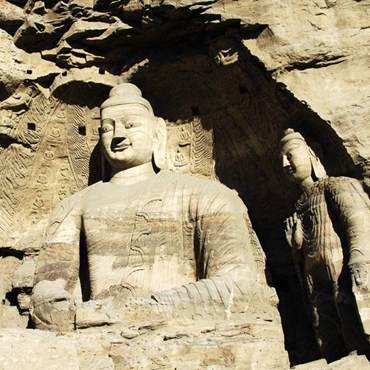
The Yungang Grottoes usually form the foundation of the itinerary we organize. The site is open, exposed, and serious in tone. The caves vary greatly in scale and style, and the differences between early and later carvings are easy to notice even without technical explanation. We do not aim to cover every cave. Instead, we allow people to spend time where their attention naturally settles.

Weather, light, and time of day all affect how the grottoes feel. We often plan visits to avoid peak congestion, not just for comfort, but because quiet makes a difference here. The carvings respond better to slow observation than to explanation.
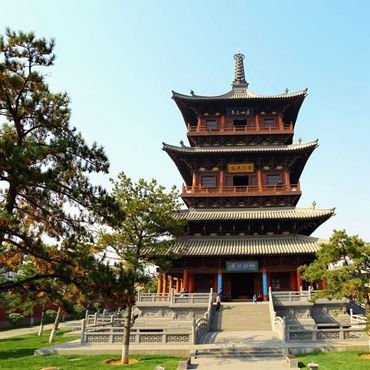
Within the city, Huayan Temple provides a different rhythm. Its courtyards and wooden halls encourage movement that is unhurried. The structure of the temple complex makes it easy to understand how religious spaces once functioned as both spiritual and communal centers. We often let travelers walk through the ancient city between sites rather than moving them by vehicle. The walls, gates, and inner streets link the attractions into a single story.
Nearby sites such as the Hanging Temple can be arranged depending on timing and interest. We usually keep these flexible rather than building the itinerary around them.
Culture and Local Atmosphere
Datong does not separate its historic areas from everyday use. People pass through temple squares on their way to work, shop for groceries near old walls, and gather in public spaces without ceremony. This gives the city a grounded feel that many travelers appreciate after visiting more heavily curated destinations.
Local habits reflect northern conditions. Life here has always required planning for cold weather and limited growing seasons. That practicality carries into daily routines. Conversations tend to be direct, and interactions are straightforward. Religious traditions remain visible, especially around Buddhist sites, but they exist as part of normal life rather than as displays.
We usually leave space in the schedule for travelers to move on their own. Datong rewards this approach. Sitting in a small restaurant, walking through a residential lane, or watching evening activity near the walls often leaves a stronger impression than any formal explanation.
Local Food
Food in Datong is shaped by necessity rather than presentation. Wheat-based dishes form the base of most meals, and noodles appear in many local variations. Preparation methods are simple, but portions are generous and filling. Steamed buns, flatbreads, and dumplings are eaten daily, not saved for special occasions.
Lamb is common, especially in colder months, and is prepared in ways that emphasize warmth and sustenance. Flavors are generally savory and direct. When we arrange meals, we tend to avoid places designed primarily for visitors. Instead, we choose small, long-running restaurants where local residents eat regularly. These meals tend to feel more honest and consistent.
Transportation Access
Datong is well connected within northern China. High-speed rail links the city with Beijing, Taiyuan, and other regional centers, making it practical to include in broader itineraries. The airport handles domestic routes and can be useful when coordinating longer journeys.
Inside the city, distances are short. The ancient city works best on foot, and most major sites are close enough to connect naturally. Short vehicle transfers cover places outside the walls, including the Yungang Grottoes. We aim to keep transportation simple and predictable rather than compressed.
Travel Pace and Planning
Datong benefits from time. We usually arrange at least two full days, and sometimes more if it is combined with nearby destinations. This allows travelers to experience the main sites without feeling rushed and still have moments of rest in between.
The city suits travelers interested in early Chinese history, Buddhist art, and places that still function as real cities rather than attractions. When we organize travel here, we do not try to reshape Datong into something else. We work with its natural rhythm and let it unfold gradually, which is usually when it leaves the strongest impression.