Dunhuang Travel Guide & Tours

Welcome to Dunhuang, the legendary Silk Road oasis where ancient Buddhist art meets singing sand dunes. As CET's specialists, we reveal a destination where the Mogao Caves preserve a millennium of sacred art against the stunning Gobi Desert backdrop. Our expertise transforms logistics into profound experiences—from securing cave access to timing perfect desert treks. We don't just show you Dunhuang; we decode its stories, making your journey through this crossroads of civilizations both seamless and meaningful.
What makes Dunhuang extraordinary:

- Mogao Caves UNESCO site: 492 surviving caves containing 45,000 square meters of murals and 2,000+ painted sculptures spanning 1,000 years (366-1368 AD)
- World's finest Buddhist cave art: Unparalleled preservation and artistic achievement rivaling or exceeding India's Ajanta Caves
- Silk Road archaeological significance: Ancient manuscripts, artifacts, and sites documenting trade route history
- Crescent Moon Spring miracle: Natural spring surviving millennia in desert surrounded by massive sand dunes
- Dramatic Gobi Desert landscapes: Pristine desert scenery with opportunities for camel trekking and sand sliding
- Ancient frontier passes: Tangible connections to Silk Road military history and border defense systems
- Living archaeological site: Ongoing research and discoveries continue revealing new insights
- Remote authenticity: Distance from major cities preserves genuine atmosphere and serious travelers
Recent improvements in transportation—expanded flight routes and new high-speed rail connections—have made Dunhuang more accessible while UNESCO and Chinese authorities implement increasingly sophisticated conservation measures protecting these irreplaceable cultural treasures.
Dunhuang in Brief: Essential Travel Facts

Quick Dunhuang Overview:
Location: Western Gansu Province, edge of Gobi Desert
Altitude: 1,100 meters (minimal altitude concerns)
Best time: April-May and September-October (avoid extreme summer heat)
Climate: Extreme desert—scorching summers (40°C+), freezing winters, minimal rainfall
Time needed: Minimum 2-3 days; we recommend 3-4 days for comprehensive exploration
Languages: Mandarin Chinese, limited English at major sites
Population: 190,000 (small city maintaining desert outpost character)
Getting there:
Flight: Direct connections from Beijing (3 hours), Xi'an (2 hours), Lanzhou (1.5 hours), Urumqi (2 hours)
High-speed rail: Lanzhou to Dunhuang (5.5 hours), Xi'an to Dunhuang (9 hours via Lanzhou)
Bus: Long-distance connections but train/flight preferable
Airport: Dunhuang Mogao International Airport 13km from city
UNESCO recognition: Mogao Caves (1987), Silk Roads: The Routes Network of Chang'an-Tianshan Corridor (2014)
CRITICAL ADVANCE PLANNING: Mogao Caves require advance online reservation—tickets sell out weeks ahead during peak seasons (April-October). Our Silk Road experts always emphasize this: we've seen too many disappointed travelers who waited until arrival only to find caves fully booked. We handle all reservations ensuring guaranteed access.
CET's Dunhuang advantage: Our Silk Road specialists have spent years studying Buddhist art history, managing desert logistics, and cultivating relationships with site administrators enabling optimal visit timing and occasionally accessing caves closed to general visitors.
Top Dunhuang Attractions: CET's Curated Selection
Mogao Caves: Buddhist Art Masterpiece

The Mogao Caves represent one of humanity's greatest cultural achievements—492 surviving caves (from original 1,000+) containing 45,000 square meters of murals and 2,000+ painted sculptures documenting Buddhism's evolution across dynasties while showcasing artistic techniques, cultural exchange, and devotional expression spanning a millennium.
Cave highlights (selection varies):
- Cave 96: Giant 35.5-meter Tang Dynasty Buddha
- Cave 17: Famous Library Cave where 50,000+ manuscripts discovered 1900
- Various Tang Dynasty caves: Peak artistic achievement with sophisticated compositions
- Northern Wei caves: Earlier, more Indian-influenced styles
- Flying apsaras motifs: Iconic celestial beings appearing throughout caves
Photography: Strictly prohibited inside caves for preservation. Exterior photography permitted.
Understanding the art: Our guides include Buddhist art specialists who explain iconography, symbolic meanings, artistic techniques, and historical contexts transforming painted walls into comprehensible narratives. Without expert interpretation, caves remain beautiful but opaque.
Conservation: Humidity, carbon dioxide, and light damage these ancient paintings. Current visitor limits and monitoring systems protect caves while allowing access—striking balance between preservation and education.
Crescent Moon Spring & Singing Sand Mountain

This extraordinary natural phenomenon—a crescent-shaped spring surviving millennia surrounded by towering sand dunes—creates Dunhuang's most iconic landscape and popular adventure activity destination.
Singing Sand Mountain (Mingsha Shan):
- 250-meter-high sand dunes creating "singing" sound when sand cascades
- Golden to deep orange coloration depending on light
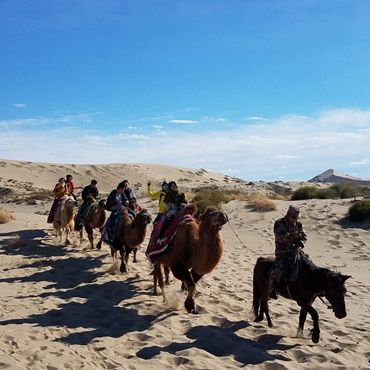
- Camel trekking available (traditional Silk Road transport experience)
- Sand sledding opportunities
- Sunset viewing platform for spectacular photography
Crescent Moon Spring (Yueyaquan):
- Natural spring fed by underground water
- Traditional pavilions and gardens around spring
- Miracle of desert hydrology surviving droughts and sandstorms
- Legend says spring never dries and never fills with sand
Best visiting times:
- Sunrise (6:00-7:00 AM): Cool temperatures, beautiful light, fewer crowds
- Sunset (7:00-8:30 PM): Spectacular colors, manageable heat, romantic atmosphere
- Avoid: 11:00 AM-4:00 PM when sand surface reaches 60-70°C (literally hot enough to burn feet)
Activities:
- Camel rides: 1-2 hour treks through dunes (¥100-300 depending on route)
- Sand sliding: Descending steep dunes on boards
- Photography: Endless opportunities with dunes, spring, mountains
- Night stays: Special permits allow overnight desert camping experiences
Our guides time visits optimally, provide appropriate footwear advice (closed-toe essential), arrange quality camel operators, and photograph guests in dramatic landscapes.
Practical notes: Bring sun protection, water, cash for activities. Climbing dunes exhausting in heat—assess fitness realistically. Sand gets everywhere—protect cameras and electronics.
Yumen Pass & Han Dynasty Great Wall

Ancient frontier passes marking the westernmost extent of Han Dynasty control, where Silk Road caravans entered and exited Chinese territory.
Historical sites:
Yumen Pass (Jade Gate): Han Dynasty fortress ruins where jade entered China from Central Asia. Square rammed-earth structure remarkably preserved in dry desert climate.
Yang Pass: Southern route fortress mentioned in Tang Dynasty poetry. More ruined than Yumen but atmospheric setting.
Han Great Wall sections: Rammed earth fortifications extending through desert—different construction from famous Beijing stone wall, offering insights into frontier defense systems.
Visiting considerations: Sites located 90km west of Dunhuang requiring half-day excursion. Stark, windswept landscapes appeal to history enthusiasts and photographers but limited infrastructure. We provide transportation, picnic lunches, and historical interpretation bringing ruins alive.
Dunhuang Museum

Excellent regional museum providing essential context for Mogao Caves and Silk Road history through artifacts, replicas, manuscripts, and explanatory displays.
Museum highlights:
- Silk Road trade goods including textiles, ceramics, coins
- Buddhist artifacts and sculpture
- Manuscript reproductions from Library Cave discovery
- Tang Dynasty cultural objects
- Archaeological finds from surrounding sites
Visiting strategy: We often schedule museum visits before Mogao Caves, providing background that enhances cave appreciation. Allow 2 hours. Free admission with passport.
Dunhuang Night Market

Evening gathering place offering local specialties, souvenirs, and atmosphere in pedestrian area with distinctive architecture referencing Silk Road themes.
Food specialties:
- Donkey meat yellow noodles: Local signature dish
- Apricot skin water: Sweet refreshing beverage
- Grilled lamb skewers: Central Asian influence
- Hand-pulled noodles: Various preparations
- Dried fruits and nuts: Reflecting desert agriculture
The market offers pleasant evening activity and authentic local dining beyond hotel restaurants.
Dunhuang Travel Guide: Practical Tips & Local Insights
Climate & Essential Packing

Dunhuang experiences extreme desert climate requiring specific preparation:
Summer (June-August):
- Scorching days (35-42°C), mild nights (18-22°C)
- Intense sun, dry air, minimal rain
- Sand storms possible (bring mask/scarf)
- High season for domestic tourism despite heat
Shoulder seasons (April-May, September-October):
- Comfortable days (15-25°C), cool nights (5-15°C)
- Clear skies, moderate crowds
- Optimal visiting periods
Winter (November-March):
- Cold days (0-10°C), freezing nights (-10 to -20°C)
- Snow possible, fewer tourists
- Lower prices, authentic atmosphere
- Some sites reduced hours
Essential packing:
- Maximum sun protection (SPF 50+, wide-brimmed hat, sunglasses)
- Closed-toe shoes with good soles (sand gets everywhere, hot surfaces)
- Layers for temperature swings
- Moisture/sunscreen for extreme dryness
- Scarf for potential sand/dust
- Warm jacket (even summer evenings cool)
Transportation & Getting Around

Within Dunhuang:
- Taxis abundant (starting fare ¥5)
- DiDi ride-hailing available
- Bicycle rentals for city exploration
- Tourist buses to Mogao Caves and Singing Sand Mountain
- Private vehicles essential for distant sites (Yumen Pass, etc.)
Regional connections:
- Xi'an: Flight or overnight train (important Silk Road route)
- Lanzhou: High-speed rail hub for continued travel
- Turpan/Urumqi: Northern Silk Road destinations
- Zhangye: Danxia landform (4 hours by bus)
We provide private vehicles for comprehensive touring, especially valuable for remote sites requiring flexible timing and expert drivers familiar with desert roads.
Local Cuisine
Dunhuang's food reflects Silk Road influences—Central Asian, Mongolian, and Chinese flavors meeting in desert oasis.
Must-try dishes:
- Yellow noodles with donkey meat: Dunhuang's signature specialty
- Hand-pulled noodles: Various styles and toppings
- Lamb dishes: Grilled, stewed, in noodle soups
- Apricots and dried fruits: Local agriculture specialties
- Yogurt drinks: Refreshing in desert heat
Dining locations: Night market offers authentic casual dining. Hotel restaurants provide comfort food. Local noodle shops serve best traditional dishes.
Water: Tap water not potable. Stick to bottled water, especially important in dry climate requiring extra hydration.
Desert Safety & Etiquette

Physical preparation:
- Desert conditions more demanding than anticipated
- Stay hydrated (2-3 liters daily minimum)
- Heat exhaustion risk during summer midday
- Sand climbing surprisingly strenuous
Cultural respect:
- Mogao Caves are active Buddhist sites deserving reverence
- Photography prohibitions protect irreplaceable art
- Modest dress at religious sites
- Follow guide instructions regarding touching/approaching artifacts
Environmental responsibility:
- Desert ecosystems fragile despite harsh appearance
- Pack out all trash
- Stay on designated paths at archaeological sites
- Don't remove any artifacts (illegal and damages sites)
Sustainable Tourism
Conservation efforts focus on protecting caves from environmental damage and managing visitor impact:
- Strict visitor limits prevent overcrowding
- Digital presentations reduce time in actual caves
- Climate control systems protect paintings
- Ongoing research guides preservation strategies
We support these efforts through responsible touring, educating guests about conservation challenges, and promoting respect for these irreplaceable cultural treasures.
Dunhuang Travel Q&A
Q: Is Dunhuang worth the travel time?
A: Absolutely. The Mogao Caves are among humanity's greatest artistic achievements. Combined with the dramatic desert landscape and authentic Silk Road atmosphere, the journey is highly rewarding. We recommend a minimum of 3 days to make the trip worthwhile.
Q: When should I book Mogao Caves tickets, and is it complicated?
A: Tickets, especially for the popular season (April-Oct), should be secured weeks in advance. The booking system can be challenging for independent travelers. We handle all reservations to guarantee your access and optimal cave selection, eliminating the hassle.
Q: What is the key advantage of taking a CET tour?
A: Our tours transform the caves from beautiful sights into profound narratives. With expert guides (often art historians), we decode the Buddhist iconography and Silk Road history, providing context and access that independent travel cannot match.
Ready to Walk the Ancient Silk Road?

For decades, Dunhuang has captivated travelers with its power to bridge centuries. Here, the silence of the desert echoes with Silk Road legends, and the sublime Buddhist art within Mogao's caves speaks of profound devotion. From the glow of sunset upon Singing Sand Mountain to the vivid colors of a 1,400-year-old mural, this is where history feels palpably alive.
Let us guide you through this living museum. With CET, you gain more than a visit—you gain a narrative. Our art historian guides unlock the stories behind the murals, while our expertise guarantees seamless access and deep cultural immersion. We don't just show you Dunhuang; we reveal the soul of the Silk Road.
Your journey into the heart of ancient China awaits. Contact us to craft a Dunhuang experience that transcends the ordinary.