Guiyang Travel Guide & Tours
Guiyang works best as a 3–4-day base for exploring Guizhou. Focus one full day on city highlights such as Qianlingshan Park and Jiaxiu Pavilion, one day in Qingyan Ancient Town, and reserve at least one full day for Huangguoshu Waterfall or nearby karst scenery. Expect mild summers, cool winters, efficient metro lines, and food that leans heavily toward sour and spicy.
Guiyang impresses through clean air after rain, steep green hills rising behind residential blocks, and the calm confidence of a provincial capital that never chased mass tourism. Let me walk you through it properly.

Why Guiyang Matters
Guiyang serves as the capital of Guizhou Province and the logistical heart of Southwest China's karst region. High-speed rail links it to Chongqing, Chengdu, Kunming, and Guangzhou within hours. The metro system now runs multiple lines, reducing transfer friction between railway stations, airport, and downtown districts.
For high-net-worth travelers, Guiyang offers three advantages:
- Lower crowd density than first-tier cities
- Direct access to minority villages and waterfall systems
- Food culture that remains local rather than standardized
Guiyang spreads across hills. Roads curve and rise. Google Maps sometimes misjudges walking time because of elevation.
Key zones:
- Yunyan District – Traditional center, parks, temples
- Nanming District – Riverfront, Jiaxiu Pavilion, older neighborhoods
- Guanshanhu District – New development, modern museums, government zone
- Huaxi District – Ancient town, countryside, university area
If you understand these districts before arrival, you save hours.
Top Tourist Attractions
1. Qianlingshan Park
This park defines Guiyang's character.
- Entry: ¥5
- Time required: 3–4 hours
- Elevation gains to temple: approx. 150 meters
- Steps to summit viewpoint: roughly 1,000
Inside you'll find:
- Forested hills
- Wild macaques accustomed to visitors
- Hongfu Temple dating to the Qing period

From the upper terraces, you look down across dense urban blocks framed by mountains. The professor I mentioned earlier stood silently for five minutes here.
Guide Alex's Insider Tip: The air after a light rain feels noticeably fresher than in most Chinese capitals. Guiyang's elevation and vegetation keep the atmosphere cleaner than visitors expect. Arrive before 9:00 AM to avoid local tour groups.
2. Jiaxiu Pavilion
Built in the Ming Dynasty and reconstructed multiple times, Jiaxiu Pavilion sits dramatically over the Nanming River. This iconic landmark, with its three-tiered, eaves-tiled roof, appears to float on a narrow stone pier, reflected perfectly in the gentle currents below. A small arch bridge connects it to the southern bank, adding to its picturesque charm. Visit at dusk.
Best viewing time: 18:30–19:30, when the setting sun paints the sky in hues of orange and purple, and the pavilion's lights begin to twinkle, creating a magical reflection in the water.
Photography position: Riverside promenade 100 meters downstream. This spot offers the classic, unobstructed view of the pavilion framed by the modern city skyline in the background.
It represents Guiyang's literati history and provincial scholarship tradition, having been a revered gathering place for scholars taking imperial exams. The name "Jiaxiu," meaning "surpassing the beautiful," embodies the aspiration for academic and cultural excellence.
3. Guizhou Provincial Museum
Located in Guanshanhu District, easily accessible near Metro Line 1, this striking modern museum is a gateway to the province's diverse heritage.
Serious travelers should not skip this museum. Its well-curated exhibits cover the rich tapestry of Guizhou.
Karst geology: Interactive displays explaining the formation of the province's otherworldly caves, peaks, and sinkholes.
Minority textiles: A breathtaking collection of intricate embroidery, batik, and silverwork from the Miao, Dong, and other ethnic groups, showcasing vibrant patterns and centuries-old techniques.
Bronze drums: Ancient ceremonial drums, considered symbols of power and wealth, with detailed patinas that speak to a distant past.
Fossil discoveries: Fascinating exhibits of ancient reptile and fish fossils, highlighting Guizhou's significance in paleontology.
It provides intellectual grounding before you visit rural areas, helping you appreciate the landscapes and cultures you will encounter on a much deeper level.
4. Qingyan Ancient Town
Distance from downtown: 29 km
Travel time: 50–70 minutes.
Sits among rolling green hills, this well-preserved town is a labyrinth of winding stone streets, ancient archways, and fortified walls that speak to its strategic military origins in the Ming Dynasty.

Ticket tiers:
Basic entry: ¥20 – Grants access to the main streets and atmosphere.
Full access to historical residences: ¥80 – Allows entry into former scholars' homes, temples, and the impressive Catholic and Protestant churches, a testament to the town's historic role as a cultural crossroads.
Stone streets, polished to a sheen by centuries of foot traffic, lead past workshops selling local honey and crispy tofu. Yes, it gets busy on weekends. Arrive before 10:00 AM or after 15:30 to experience its quiet charm and watch the sunset paint the old walls gold. Spend at least 2.5 hours here to get lost in its alleys and soak in the atmosphere.
5. Tianhe Lake (Tianhetan)
A scenic park centered on a clear lake, fed by an underground river that has carved a spectacular karst cave system. The journey here is a perfect introduction to Guizhou's dramatic geology.
Cave + waterfall combo ticket: approx. ¥52
Add sightseeing car: ¥82 (recommended to save time and energy getting from the entrance to the lake and cave).
Total visit time: 3–4 hours.
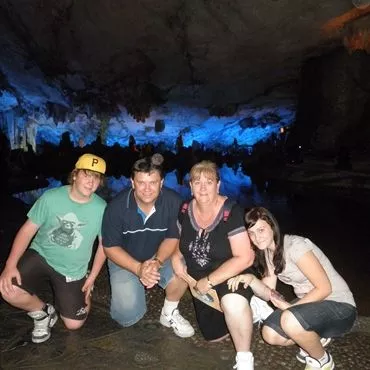
The experience begins with a serene boat passage through limestone caverns. As your eyes adjust to the dim light, a wonderland of stalactites, stalagmites, and stone pillars is revealed, eerily lit and reflected in the still, dark water.
The boat trip exits into a dramatic enclosed valley, home to a striking underground waterfall that cascades from a crevice in the rock face. It offers controlled, accessible exposure to Guizhou's geology without requiring serious hiking.
6. Huangguoshu Waterfall (Day Trip)
Distance: 137 km
Travel time by car: 2–2.5 hours. This is Guizhou's most famous natural wonder, a thundering curtain of water that is truly awe-inspiring in its scale and power.
Plan 5–6 hours on site. The experience extends far beyond a single viewpoint. Follow the winding path that leads you to multiple perspectives: from a frontal viewing platform where you feel the spray on your face, from the side where you can see the full width of the falls, and most uniquely, from Shuiliandong (Water-Curtain Cave), a natural cave hidden directly behind the cascading torrent.
Walking through this cave, with the curtain of water roaring just feet away, is an unforgettable sensory experience. The park also includes the smaller, tiered Doupotang Falls upstream and the wide, shallow Luositan Falls downstream, accessible by shuttle bus.
Food Explained Properly
Guiyang cuisine relies on three dominant flavors:
- Sour (fermented broth)
- Spicy (fresh and dried chilies)
- Smoky (cured meats)
Sour Soup Fish (酸汤鱼)
The broth uses fermented tomatoes and rice.
Average cost in mid-range restaurant:
- ¥80–120 per person in group setting
Order vegetables separately and cook at table.
Beef Noodles (牛肉粉)
Breakfast standard.
- ¥12–20 per bowl
- Choose clear broth or chili oil base
Locals add raw garlic cloves and dried chili powder.
Maotai Culture
Guizhou produces China's most famous liquor: Maotai (53% ABV).
You can sample Maotai-flavored ice cream in city hotels and specialty shops. Expect strong aroma even at 2% infusion levels.
Guide Alex's Insider Tip: Visitors often fear the spice level. Ask for mild spicy. Restaurants adjust heat without compromising flavor. Locals remain warm, direct, and generous at the table.
Shopping: What's Worth Buying
Guiyang does not compete with Shanghai luxury malls. Shop for regional items instead.
Recommended Purchases
- Anshun batik textiles
- Miao silver ornaments
- Guizhou green tea
- Packaged cured meats
Expect negotiation in small markets, fixed pricing in malls.
Transportation: How to Travel Efficiently
Arrival
Guiyang Longdongbao International Airport
- Airport taxi to center: ¥60 flat rate
- Metro Line 2 connects airport to city
Travel time: 20–30 minutes.
High-Speed Rail Stations
- Guiyang North Railway Station
- Guiyang East Railway Station
Confirm your departure station. They are far apart.
Metro System Overview
Guiyang Urban Rapid Transit operates multiple lines.
Fare structure:
- ¥2–6 typical range
- Clean and punctual
If you stay in Guanshanhu District, Metro Line 1 simplifies movement dramatically.
Taxi and Ride Apps
- Starting fare: ¥10
- Late night: ¥12
Traffic remains manageable compared to major coastal cities.
Climate and Best Time to Visit
Guiyang sits at elevation (~1,100 meters). Summers stay cooler than most of China.
Average summer high: 25–28°C
Winter average: 5–10°C
Rain concentrates between May and August.
Best months:
- April
- May
- September
- October
Karst Geography and Cultural Layering from Academic Perspective
Guizhou's limestone base created caves, sinkholes, and underground rivers. This geology shaped settlement patterns. Villages formed around water access and defensible hilltops.
Ethnic groups including Miao and Bouyei developed textile traditions partly because mountainous terrain limited large-scale agriculture.
When I explain this to university groups, I stress how environment dictates culture. Guiyang serves as the interpretive gateway to that relationship.
FAQ
1. How many days do I need in Guiyang?
Three full days cover city highlights and one major day trip.
2. Is Guiyang suitable for elderly travelers?
Yes. Most major sites offer paved paths and shuttle cars.
3. Does Guiyang require Mandarin skills?
Basic English appears in hotels. A local guide improves efficiency.
4. Is the food extremely spicy?
It can be. Ask for mild spice; kitchens adjust easily.
5. Can I visit Huangguoshu independently?
Yes. High-speed rail plus taxi works well.
6. Is Guiyang expensive?
No. Luxury hotels and meals cost significantly less than Beijing or Shanghai.
Guiyang rewards travelers who prefer substance over spectacle. It offers mountain air, honest food, layered minority culture, and direct access to Southwest China's most dramatic natural scenery. As someone who has walked these streets with experienced travelers, culture and nature lovers, foodies and families, we can say confidently: Guiyang earns its place on an authentic China tour itinerary.