Qiandongnan Travel Guide & Tours
In the southeastern mountains of Guizhou, life follows a different beat. Set off for Qiandongnan, where in the hills and valleys of the south, the village roofs are of thatched turf and the landscape dotted with the dramatic drum towers, as tradition seeps into the fabric of daily life alongside the beautiful stitching of clothes and the sweet singing of the tunes. Here, culture is part of daily life, from embroidered clothes to loud songs. We invite you to journey with us into the heart of Miao and Dong villages, where every winding mountain road leads to discovery.
Qiandongnan: A Living Tapestry of Minority Cultures

Qiandongnan has over thirty ethnic groups. The Miao and Dong peoples shape their culture the most. From our travels through these verdant valleys, we have come to understand that this region offers something increasingly rare: communities where traditional architecture, dress, music, and ritual remain integral to everyday existence.
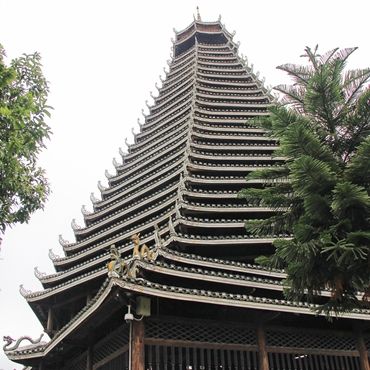
The Dong people are master carpenters. We always feel amazed by the detailed work of a village's Drum Tower. These tall wooden buildings are made without a single nail. They are the social and spiritual heart of each community. The Wind-Rain Bridges are also great. These covered wooden bridges give shelter to travelers and villagers. The Diping Wind-Rain Bridge and the towers of Zhaoxing Dong Village are some of the best examples.
The Miao are known for their bright silver accessories and colorful festivals. In Basha Miao Village, men carry old guns and wear traditional hairstyles. In the Kaili area, the nearest big city, many Miao villages have their own dialects, embroidery designs, and rituals.
These towns use the traditional stilted architecture (ganlan-style). They have elegant stilt houses made of wood. These houses are built into hillsides at a steep angle. Their black wood has turned dark patina from the mountain mists over the years. Exploring these towns, like Xijiang Qianhu Miao Village, the largest Miao settlement with over 1,000 families, is like going to a different world.
Practical Overview

A tour to Qiandongnan is best for those who like slow, deep travel. This is not a place to rush. We recommend a minimum of three to five days to visit several villages and absorb the region's unique atmosphere. Those with more time can spend weeks exploring without exhausting its wonders.
Getting There and Getting Around
Most travelers enter the region through Guiyang, the provincial capital, which has excellent air and rail connections across China. From Guiyang, high-speed trains reach Kaili in under an hour, making it the ideal base for exploring the surrounding Miao villages.
For Dong areas, including Zhaoxing, travel typically involves longer bus journeys through winding mountain roads. Local buses and minivans connect villages, though schedules can be infrequent. We always advise building flexibility into your itinerary. Hiring a private driver for a few days gives ease and access to more remote communities. Check the current Qiandongnan tour maps before you go to know the geography and distances.
Where to Stay
For the most authentic experience, stay in village guesthouses or homestays. Although facilities may be basic, with simple rooms and squat toilets in smaller villages, the hospitality is genuine. Waking to the sounds of roosters and wood smoke and sharing breakfast with your hosts offers a level of connection that no hotel can match. Waking up to rooster sounds and sharing breakfast with your hosts is special. Kaili and Zhaoxing have more modern options if you prefer.
Savoring Local Flavors

From our experience, sharing a meal in a Miao family's home is an unforgettable experience. Qiandongnan cuisine centers on bold, sour flavors. Sour Fish Soup (Suantang Yu), simmered with tomatoes and pickled chilies, is a regional specialty not to be missed. Glutinous rice accompanies most meals, often steamed in bamboo and eaten by hand.
Dong villages are famous for pickled meats and vegetables, which are preserved using techniques that have been passed down through the generations. Rice wine is freely flowing during festivals and family gatherings, so accept a cup graciously, as refusing it may offend. Local markets are fascinating for adventurous eaters, offering ingredients rarely seen elsewhere.
Treasures to Bring Home
When shopping, you’ll find amazing traditional crafts. Miao silver jewelry, like headdresses and necklaces, is some of China’s best metalwork. Each piece has a meaning.
Batik textiles and intricate embroidery make meaningful souvenirs. We suggest buying directly from the artists in the villages. This helps them and gives you a real connection. Kaili’s markets have more choices, but bargaining is common.
Festivals and Living Traditions

In Qiandongnan, fun means experiencing real culture. At the Miao Lusheng Festival, the sound of lusheng (reed pipes) fills the village squares with music and dance. Dong people gather in drum towers for Grand Song performances. These songs are special and recognized by UNESCO.
Major festivals occur throughout the year, with spring and autumn particularly rich. Visiting during a festival offers an unforgettable spectacle, though villages become crowded. Quieter periods allow deeper interaction with residents and unhurried exploration.
Essential Travel Tips

The best times to visit are spring (March–May) and autumn (September–November), when the weather is mild, and there are frequent festivals. Summers are hot and rainy, while winters are cold and damp.
Cultural sensitivity is very important here. Always ask permission before taking photographs of people, especially elders in traditional dress. Dress modestly when visiting villages. Learning a few greeting words will be well-received. Respect sacred spaces, including drum towers and ancestral shrines.
Expect winding mountain roads and the occasional bout of motion sickness; take remedies if you're prone to it. Mobile phone signal can be unreliable in remote areas. Now, mobile payments are common in towns, but it's always a good idea to have some small notes on you for use in remote villages, local markets and with small vendors.
Common Questions
Travelers often ask about safety, health, and logistics. Qiandongnan is generally very safe, with welcoming communities.
No special vaccinations are required, though standard travel precautions still apply.
The region's remoteness is part of its charm, so embrace the slower pace and the occasional unpredictability.
Your Tour Begins Here
Qiandongnan’s culture is hard to describe. Each village has its own traditions. Every path shows new beauty. The drum towers, wind-rain bridges, silver jewelry, sour soup, and ancient songs; these experiences stay with travelers long after they leave.
We believe respectful, curious travel can benefit both visitors and host communities. Approach Qiandongnan with patience, openness, and genuine interest, and you will be rewarded beyond measure.
Ready to step into a world of ancient songs and towering drum towers? Use this guide as your starting point, and explore our detailed articles on transportation, accommodation, festivals, and individual villages to plan your respectful and unforgettable journey into the heart of Qiandongnan.